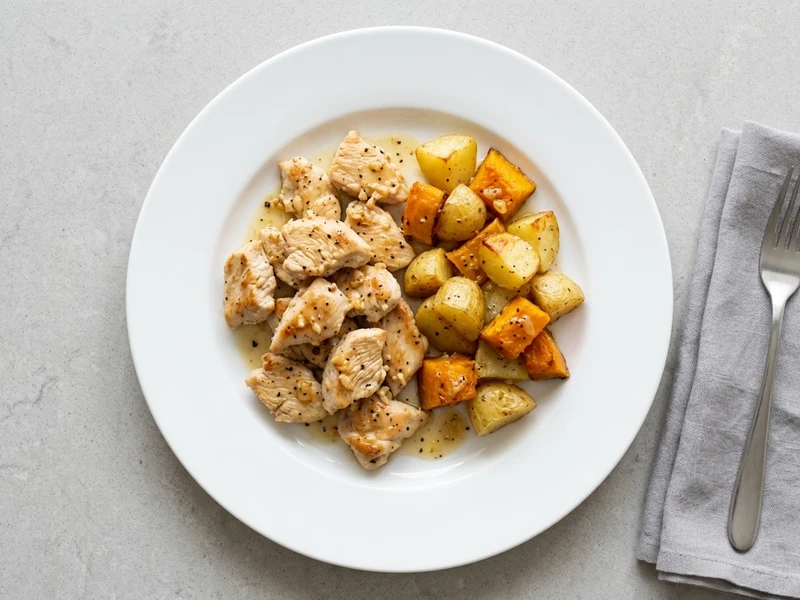
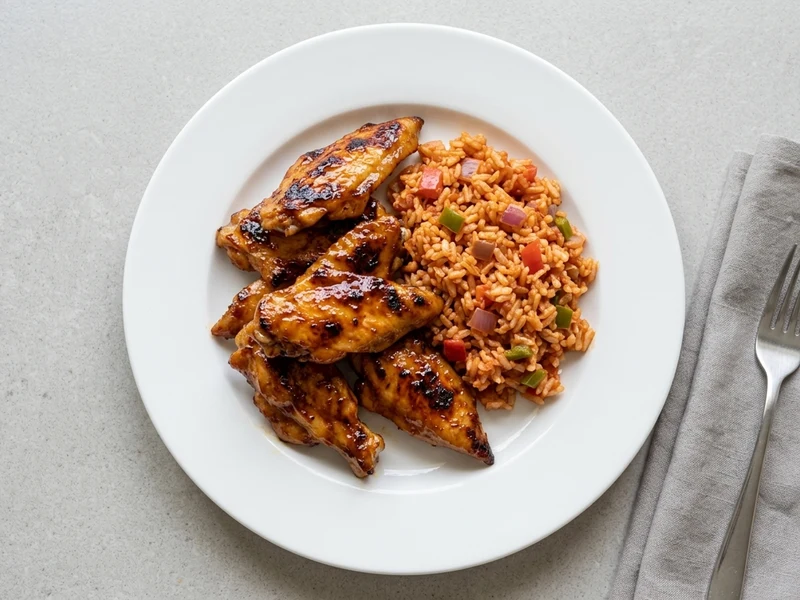
Chicken is a high-protein staple, but the full meal still matters. Here is how to use it in practical meal planning.
How Much Protein Is in 100g of Chicken?
19 March 2026 | Updated 26 October 2026 | Category: High Protein Meals
Quick answer: 100g of cooked, skinless chicken breast carries about 31g of protein, 165 calories and 0g of carbohydrate; 100g raw is about 23g, because cooking drives off water (Australian Food Composition Database, typical values). A 150g cooked serve is about 46g, more than a whole high-protein meal needs.
Chicken is a reliable protein anchor, but the full meal still decides whether it suits your target. Sauce, sides, cut, and serving size all matter when comparing ready-made options.
Chicken, prawns, bacon and milk are the protein lookups people run while planning a day, so the per-100g and per-serve numbers are collected here. Figures are typical values from the Australian Food Composition Database, cooked weights where stated, rounded for planning; brands and cuts vary.
How much protein is in 100g of chicken breast?
About 31g cooked. Grilled skinless chicken breast carries about 31g of protein per 100g with about 165 calories and 0g of carbohydrate; the same chicken weighed raw is about 23g per 100g because cooking drives off roughly a quarter of its water (Australian Food Composition Database, typical values). A 150g cooked serve is about 46g.
| Food | Protein per 100g | Typical serve | Protein per serve |
|---|
| Chicken breast, grilled, skinless | ~31g (cooked); ~23g (raw) | 150g cooked | ~46g |
Shop the range
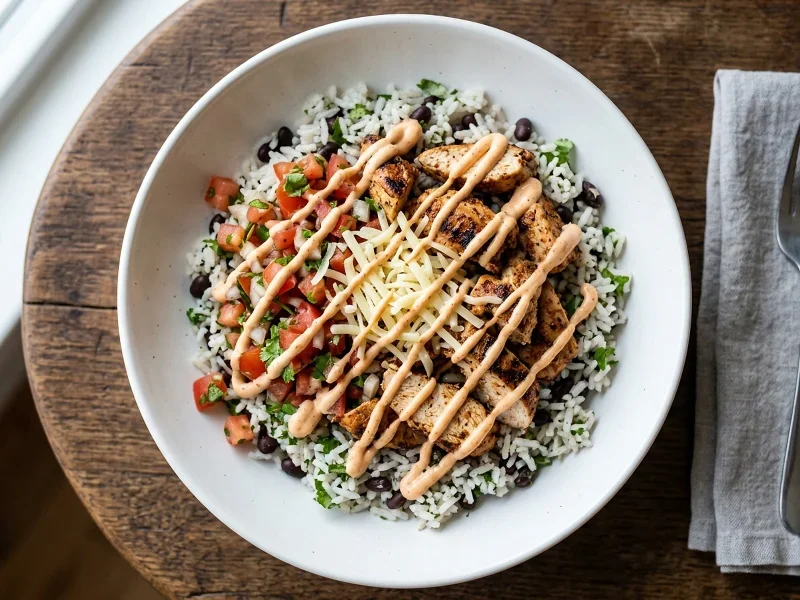
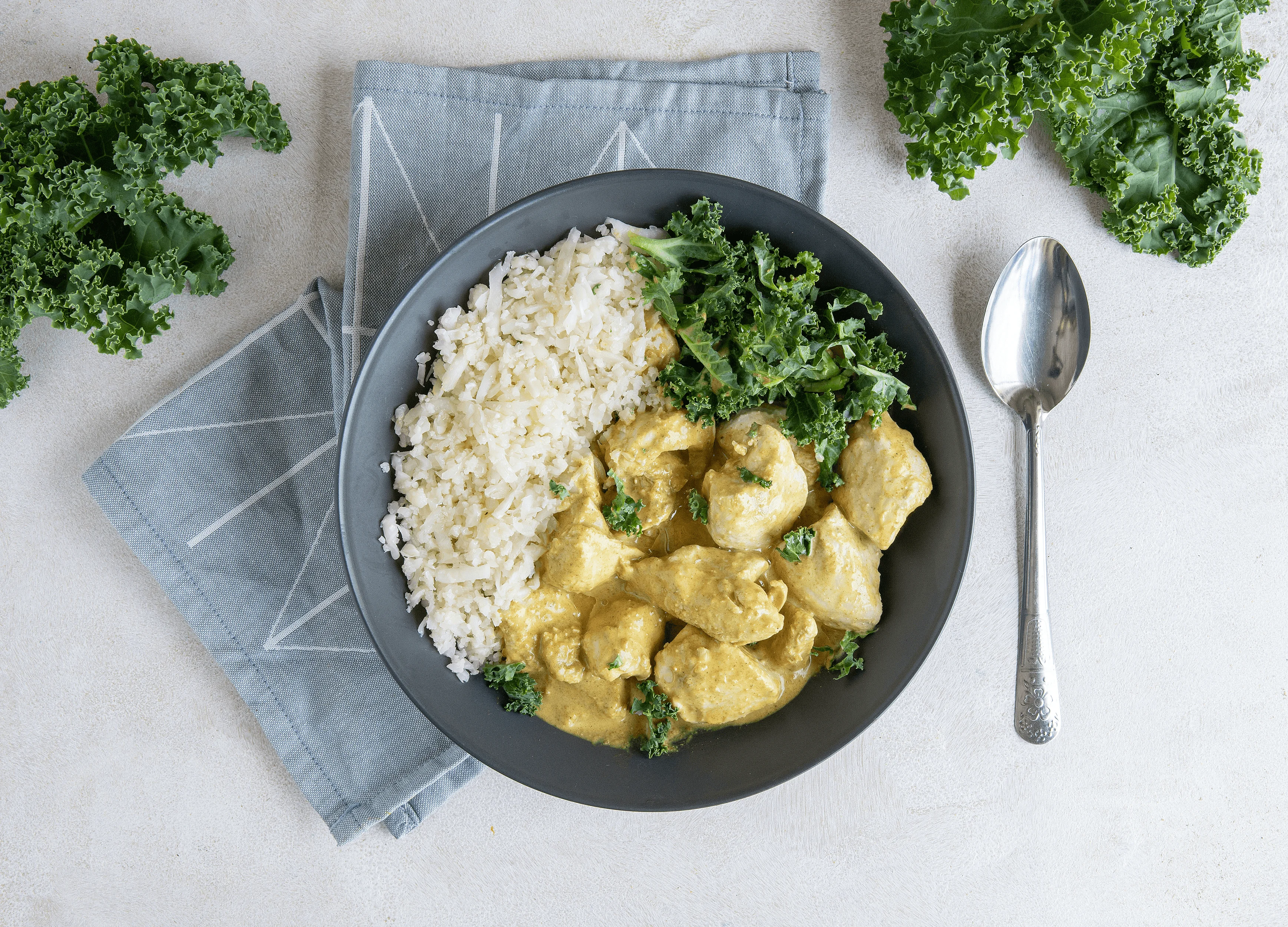
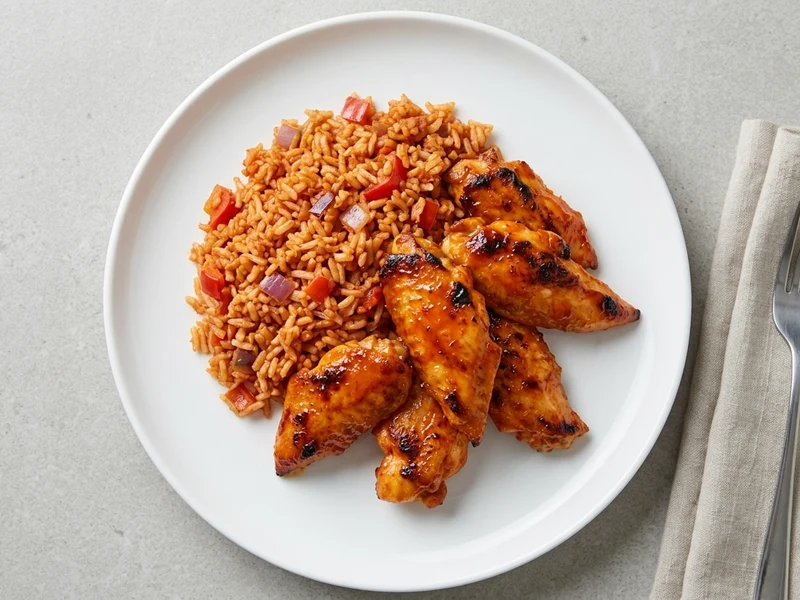
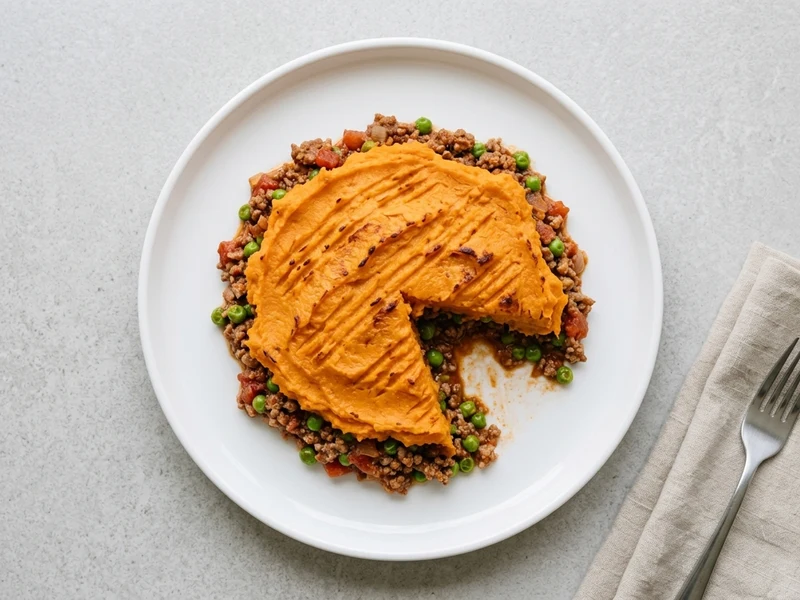
6 Foober meals that fit this guide, with the price and protein from the live menu (5 November 2026). Every meal is chef-made in Sydney, delivered chilled, with the full nutrition panel on its page.
Browse all high-protein meals — every meal shows protein, calories, carbs and fats before you order.
How much protein is in half a chicken?
About 70–75g. A typical 1.2kg roast chicken yields roughly 550g of edible meat once the bones are removed, so half a chicken is about 275g of meat at about 27g of protein per 100g across breast, thigh and leg (Australian Food Composition Database, typical values). Eating the skin adds fat and calories, not protein.
| Food | Protein per 100g | Typical serve | Protein per serve |
|---|
| Roast chicken meat, mixed cuts | ~27g (cooked, skinless) | Half a 1.2kg chicken (~275g meat) | ~70–75g |
How much protein is in a whole chicken?
About 140–150g from a 1.2kg bird. Once roasted and taken off the bone, a standard supermarket chicken gives roughly 550g of meat at about 27g of protein per 100g (Australian Food Composition Database, typical values). Larger 1.6–1.8kg birds reach about 200g. Spread over four meals, one chicken is about 35g of protein per serve.
| Food | Protein per 100g | Typical serve | Protein per serve |
|---|
| Roast chicken meat, whole bird | ~27g (cooked, skinless) | Whole 1.2kg chicken (~550g meat) | ~140–150g |
How much protein is in prawns?
About 24g per 100g cooked. Prawns are one of the leanest proteins available: roughly 24g of protein, 100 calories and 0g of carbohydrate per 100g cooked and peeled (Australian Food Composition Database, typical values). A 150g serve is about 36g of protein, which is why prawns top the protein-per-calorie rankings.
| Food | Protein per 100g | Typical serve | Protein per serve |
|---|
| Prawns, cooked, peeled | ~24g | 150g (about 12 large prawns) | ~36g |
How much protein is in bacon?
About 30g per 100g grilled, but a serve is small. Two grilled middle rashers (about 50g cooked) carry about 15g of protein alongside roughly 1,500–1,800mg of sodium per 100g (Australian Food Composition Database, typical values). Bacon flavours a high-protein breakfast; eggs or chicken carry it.
| Food | Protein per 100g | Typical serve | Protein per serve |
|---|
| Bacon, middle rasher, grilled | ~30g | 2 rashers (~50g cooked) | ~15g |
How much protein is in a cup of milk?
About 8.5g. Full-cream milk carries about 3.4g of protein per 100mL, so a 250mL cup is about 8.5g of protein with about 12g of carbohydrate from lactose; skim milk is about 9g of protein per cup (Australian Food Composition Database, typical values). A latte, therefore, is a 9g protein snack, not a meal.
| Food | Protein per 100g | Typical serve | Protein per serve |
|---|
| Milk, full cream | ~3.4g per 100mL | 250mL cup | ~8.5g |
Chicken is popular because it is predictable
Chicken is one of the easiest proteins to build a routine around. It works in salads, curries, bowls, low-carb meals, and higher-energy training meals, which makes it useful whether your priority is protein, convenience, or portion control.
The exact nutrition depends on the cut, cooking method, sauce, and serving size. Chicken breast is usually leaner, while thigh can be richer and more forgiving in prepared meals. The best choice is the one that fits the rest of your day.
Check the whole chicken meal
A chicken meal is not automatically high protein or low carb just because chicken is included. Rice, pasta, creamy sauces, oils, and toppings can change the nutrition profile quickly.
Foober makes the comparison easier because the nutrition information is available before you order. You can compare high-protein meals, low-carb meals, and the full meal menu based on your actual target.
- Choose leaner chicken meals when protein-to-calorie ratio matters most.
- Choose lower-carb chicken meals when carbohydrate control is the priority.
- Choose higher-energy chicken meals around training if they suit your plan.
Make chicken less repetitive
Chicken works best when the flavours change. Rotate cuisines, vegetables, and sauces so the week does not feel like the same meal on repeat.
Chicken meals are not all the same
Foober chicken meals can sit in different roles: leaner high-protein lunches, lower-carb dinners, or higher-energy meals for training days. The ingredient is only the starting point.
- Compare chicken breast-style meals with richer chicken thigh or sauce-based meals.
- Check rice, pasta, and potato sides when carbs matter.
- Rotate chicken with beef, seafood, eggs, or plant-based options for variety.
Ready-made meals that support the plan
For a more practical next step, browse high-protein meals, compare nutrition details on the full Foober menu, and choose the meals that solve the hardest part of your week.
General nutrition information only. Protein needs vary with body size, training, age, medical history, and goals. If you have kidney disease, are pregnant, or have been given dietary advice, follow guidance from a qualified health professional.
Related Foober guides and meal pages
Keep exploring this topic with Foober pages that connect the nutrition guide to practical meal choices.
A note on this article. Foober blog articles are researched with the assistance of AI tooling for source-gathering and structural drafting, then reviewed and edited by Tee — Foober's founder and certified fitness trainer — for accuracy, tone, and relevance. Nothing on this blog constitutes medical, nutritional, dietetic, or fitness advice tailored to your individual circumstances. Foober is a meal delivery service, not a healthcare provider. For personalised guidance — especially regarding medications, medical conditions, allergies, pregnancy, or significant dietary changes — please consult a qualified healthcare professional (your GP, an Accredited Practising Dietitian, or equivalent).
Browse by goal
Foober — High-Protein Meal Delivery, Australia